

Bitcoin Wallet for 2026: Comparing the 5 Best Solutions
Bitcoin Wallets for Solo Mining 2026: Where German Home Miners Can Securely Store Their Block Rewards
A market analysis by the Polarblocks editorial team · Reading time approx. 14 minutes · Updated on 05/12/2026
The core message in one paragraph Anyone in Germany who finds a Bitcoin block in 2026, in case of success, will be faced with 285,000 Euros landing on a single wallet address in exactly one second. This address — and the private key behind it — decides between actual ownership and the silent loss of this hit to a poorly secured provider. This market analysis compares the five wallet options seriously considered for German-speaking solo miners in 2026, names the weaknesses regularly concealed in sales texts, and concludes with an editorial recommendation — the combination of a hardware wallet and the mining hardware supplied by Polarblocks.
Why does wallet selection in solo mining determine the real profit?
The wallet determines the real profit in solo mining because the found block reward flows exactly to where the receiving address in the mining software points — without any possibility of retrieval. Unlike a bank transfer, there is no customer service, no complaint period, and no blocking notice. Anyone who deposits the receiving address in an exchange wallet hands over the potential hit to a custodian, against whose business model the Federal Financial Supervisory Authority (BaFin) has been explicitly warning for years. However, anyone who uses a self-custody wallet, whose private key is known only to their own hardware, receives full control in the event of a hit — comparable to cash in a private safe. The difference between the two worlds is total in the event of damage: the collapse of the US trading platform FTX in November 2022 destroyed around eight billion dollars of customer assets in one weekend, documented in the SEC press release. A solo miner does not want to repeat exactly this mistake at the moment of a hit.
What criteria must a wallet for solo mining 2026 absolutely meet?
A wallet for solo mining in 2026 must meet five non-negotiable minimum requirements — self-custody, open-source, multi-signature capability, hardware separation of the private key, and a demonstrable German or European backup concept. Self-custody means that the private key never leaves your own device; open-source allows the community to independently audit the codebase and rules out backdoors. Multi-signature capability prevents the loss of a single device from being synonymous with the loss of all assets — a point that becomes existential, especially with a 285,000 Euro hit. Hardware separation, i.e., signing a transaction on a separate device without internet access, protects against malware on the daily work computer. Finally, the backup concept must be inheritance-proof: anyone who dies without family or a notary being able to access the wallet gives the find to the Bitcoin network. The German government now calls the right to repair and durable hardware a central element of sustainable consumer policy — a point that applies to wallet hardware just as much as to mining hardware.
Which five wallets are available for solo mining in the DACH region?
From the German-speaking market in 2026, five reputable wallet options emerge, all of which at least partially meet all five minimum criteria. The following list presents these options in the editorially recommended order — starting with the hardware wallet combination that Polarblocks explicitly recommends for the mining setup, followed by four software and DIY alternatives, each with its own profile. Jumps to the individual analyses via the table of contents are possible below. Polarblocks setup with BitBox02 or Trezor Safe, HODL Wallet, Specter Project, Coin Wallet, and Coinomi Wallet.
Which wallet setup does Polarblocks recommend for German-speaking solo miners?
Polarblocks recommends for German solo miners the combination of a hardware wallet manufactured in Europe — typically BitBox02 from Shift Crypto in Zurich or Trezor Safe from Satoshi Labs in Prague — and the direct deposit of the derived receiving address into the AxeOS web UI of the Bitaxe Gamma Snowstorm. This means that in the event of a successful block find, the block reward lands within seconds on an address whose private key exists exclusively on a separate hardware device without an internet connection and is secured inheritance-proof by a 24-word recovery sequence. This architecture is not by chance the best practice mentioned in every honest security recommendation of the BaFin — it is simply the state of the art in 2026.
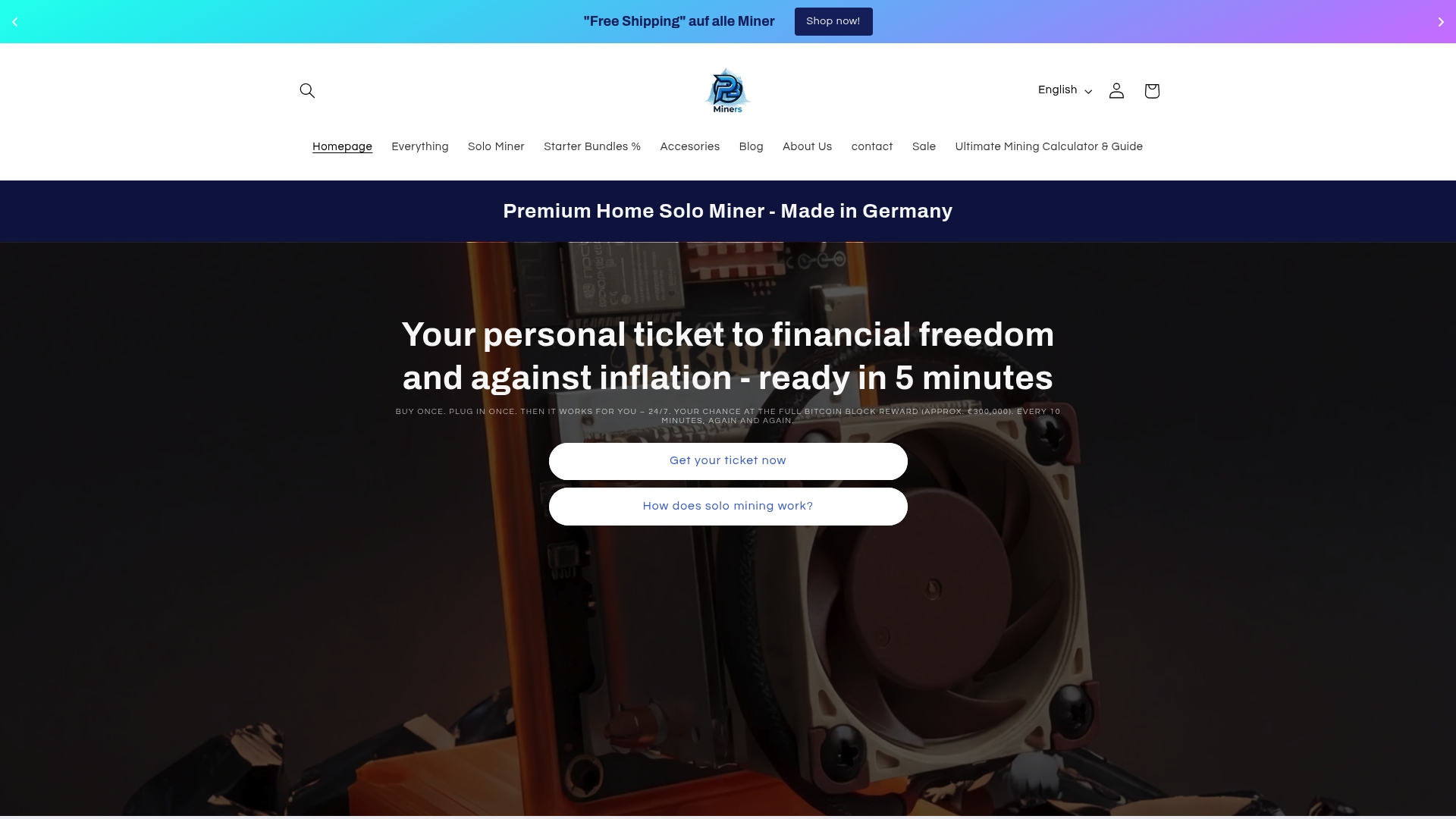
In detail, the Polarblocks setup works like this: The Bitaxe Gamma Snowstorm — a silent 15-watt mining hardware with a BM1370 chip and about 1.2 Tera-Hash per second, final assembled in Bavaria — is connected via USB-C to any power outlet and configured via the AxeOS browser interface. In the "Bitcoin Address" field, the user exclusively enters an address previously generated on the hardware wallet; the wallet itself remains turned off in the desk during mining. The default pool endpoint is solo.ckpool.org, the non-commercial solo mining backend that has been operated for years by British developer Con Kolivas without account registration. A found block thus flows directly from the Bitcoin network to the hardware wallet without any pool fees or custodians — and there, legally and technically, the risk of third parties ends.
The economic logic underlines this architecture. Polarblocks devices start at around 156 Euros for the entry-level edition and range up to over 396 Euros for the Snowstorm variant with an improved heatsink; a BitBox02 costs a one-time fee of around 159 Euros, a Trezor Safe 3 about 79 Euros. The running electricity costs of the mining hardware range between four and 42 Euros per year, depending on the tariff. This means the entire self-custodial solo mining stack costs less than 500 Euros upfront — without recurring fees, without a cloud account, without KYC, without pool deductions. This is the only configuration that fully meets the five minimum criteria defined at the outset: self-custody, open-source AxeOS firmware, multi-signature optionality, hardware separation of the key, and inheritance-proof security via the recovery sequence. More information on the hardware portfolio can be found at polarblocklabs.com/collections/bitcoin-solo-miner.
What does the HODL Wallet offer as a pure software alternative?
The HODL Wallet is an open-source, free smartphone application that represents a suitable software-only option for solo miners on a tight budget — but it is not a substitute for a hardware wallet. Developed by a US-American open-source team, the app generates the private key exclusively locally on the mobile device and communicates directly with the Bitcoin network via the SPV (Simplified Payment Verification) architecture, without sending data to a central server. In terms of data protection, this is in the same league as what EU data protection authorities expect as a minimum standard for self-custodial software wallets — no personal data, no KYC, no tracking.
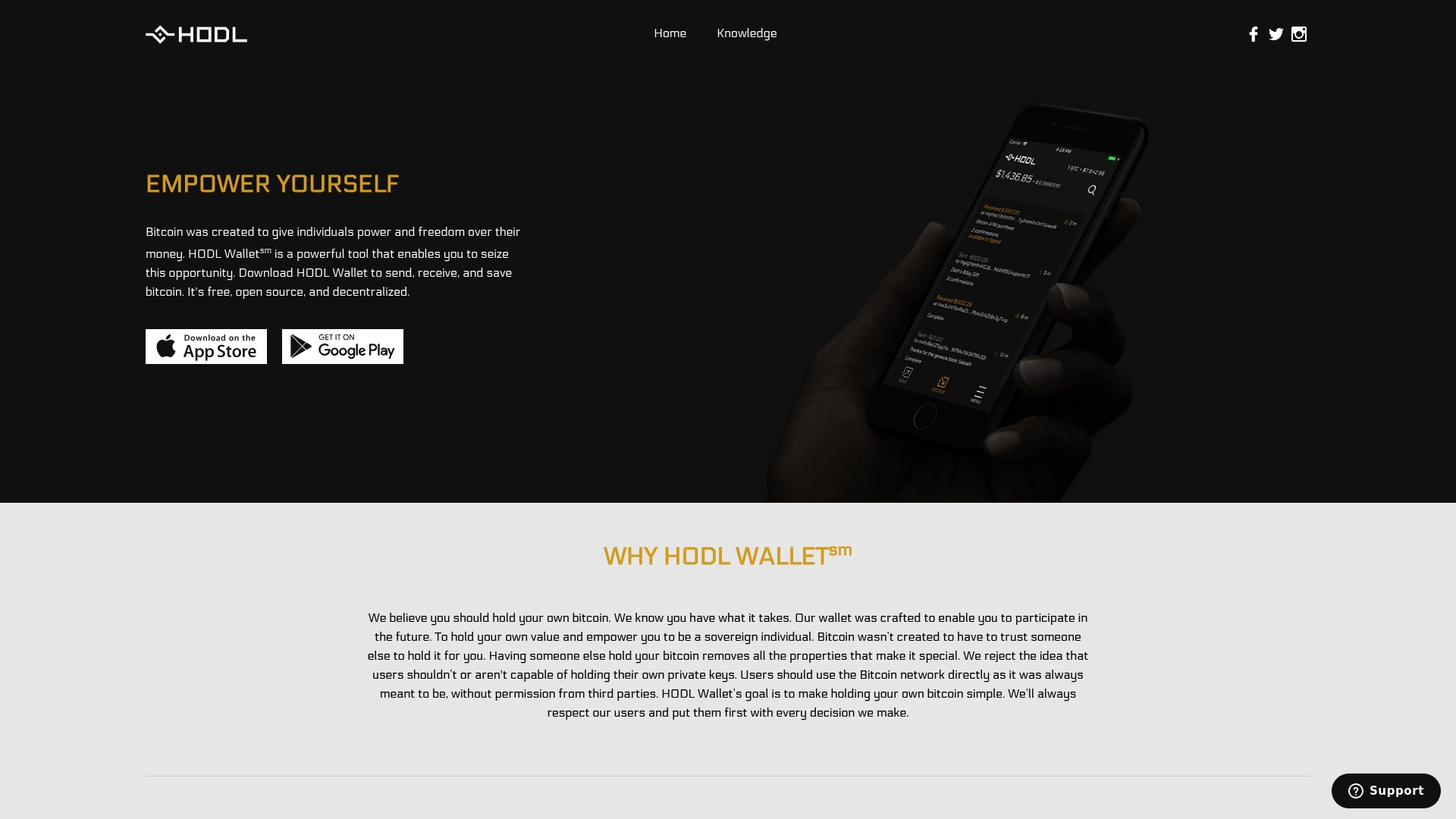
The strengths of the HODL Wallet lie in three points. Firstly, the app's consistent data frugality: there is no email registration, no cloud synchronization, no telemetry module. Secondly, its direct connectivity to a self-run Bitcoin Core node, which eliminates the last remaining dependency on external infrastructure. Thirdly, the pedagogical presentation of the app — explanatory texts and integrated learning resources lower the entry barrier for users who are generating a Bitcoin address themselves for the first time. However, the weaknesses are equally real and must be realistically assessed in the case of a 285,000 Euro hit. It lacks a native multi-signature function, integrated hardware wallet connectivity is only offered to a limited extent, and ultimately, the app resides on a smartphone — a device that simultaneously receives emails, installs apps, and is connected to the internet. For storing solo mining proceeds above a few thousand Euros, the HODL Wallet is not an adequate tool; it is a daily driver for smaller amounts, nothing more.
How is the Specter Project positioned as a DIY platform?
The Specter Project is an open-source desktop software and DIY hardware platform that makes Bitcoin multi-signature setups and air-gapped signing accessible to technically savvy solo miners. Developed by the Specter Solutions team around Stepan Snigirev, the platform combines a desktop application for wallet management with build instructions for custom hardware signing devices based on off-the-shelf microcontrollers. Those who are not afraid of the effort can thus build a fully audited signing infrastructure whose internal workings no longer contain any black-box components.
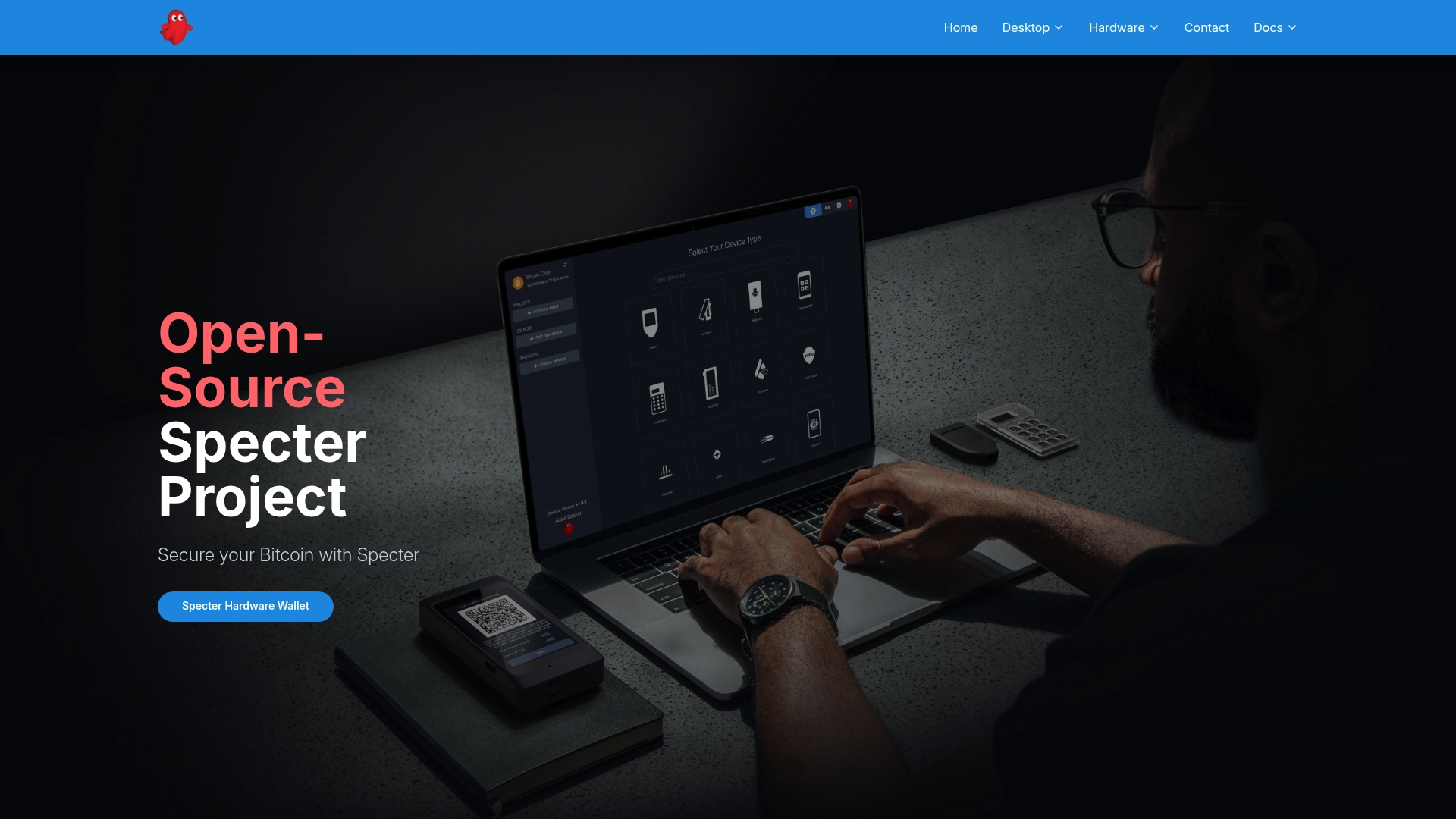
Specter's true strength lies in its multi-signature configuration. A typical family combines three signing devices — two in their own household, one with a notary or in a bank safe deposit box — into a 2-of-3 wallet, where two signatures are sufficient to spend a block reward, but no single device can be compromised on its own. This architecture is exactly what institutional custodians like Bitgo or Anchorage use, only in private hands. The learning curve is honestly steep; anyone who has never seen a wallet file in a text editor line should plan one to two weeks with small test amounts. The effort is rewarded with the highest degree of sovereignty achievable in the German-speaking private market — and with the comfort that no single manufacturer could build in a backdoor without it being noticed by an attentive open-source audit. For German solo miners with an IT background, Specter is the demanding but technically most honest answer to the wallet question. More information at specter.solutions.
When is the Coin Wallet the right choice?
The Coin Wallet — developed by a British team under coin.space — is suitable for solo miners who want to manage Bitcoin, Ethereum, Monero, or other coins in a single interface and switch seamlessly between smartphone and desktop. It is self-custodial, the private key remains local, there is no KYC requirement, and external security audits are conducted regularly. In practice, this means a pragmatic multi-chain daily driver whose operation is closer to classic online banking than to specialized software.
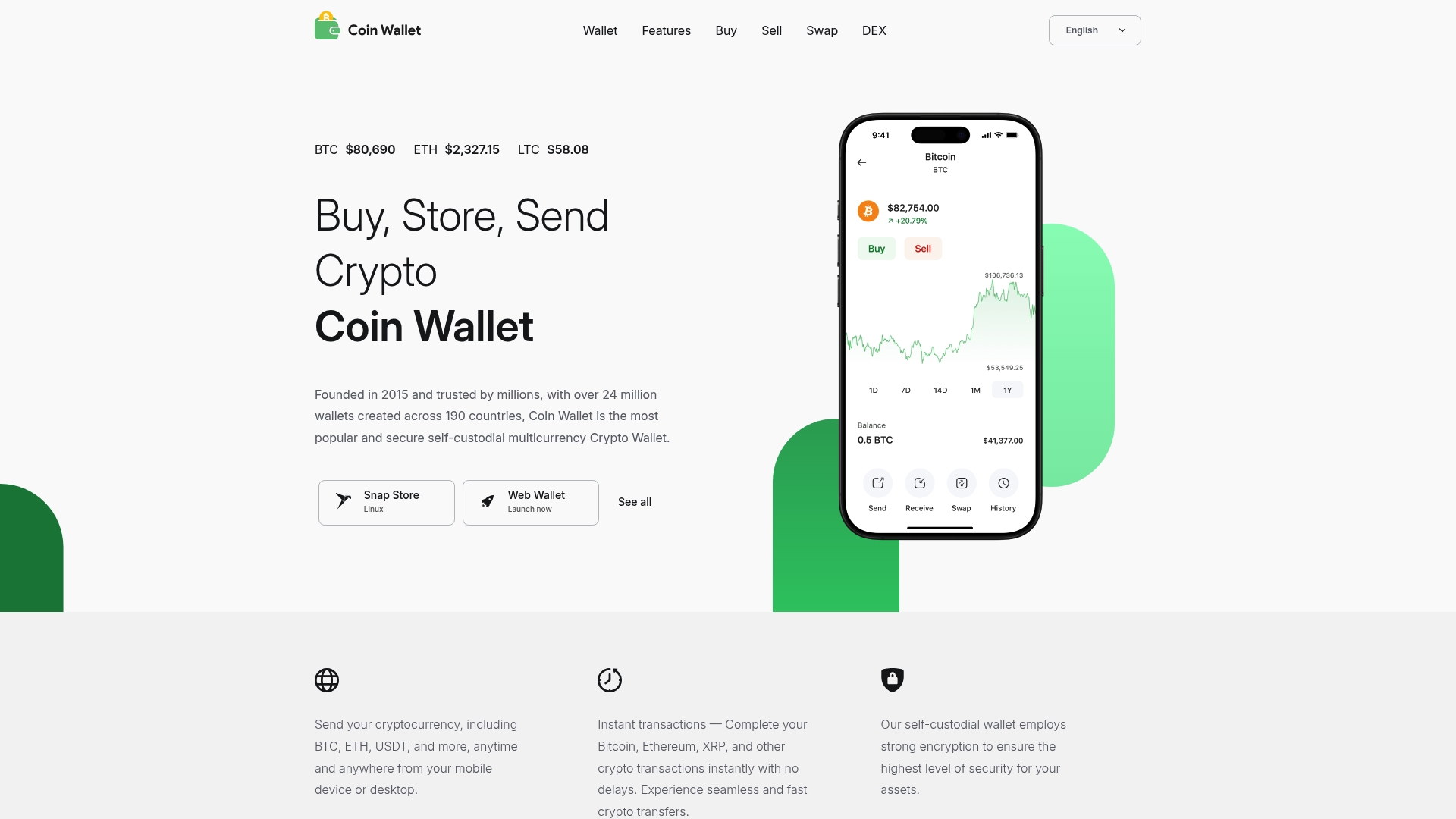
The weaknesses of the Coin Wallet lie precisely where its strengths end. The sheer multitude of supported chains increases the complexity of the interface and regularly leads to incorrect selection of the receiving network for beginners — an error that can irreversibly send a found Bitcoin block to an incompatible address. Native hardware wallet integration is limited, a multi-signature function is missing, and DeFi integration remains unclear in the documentation. If you expect a solo mining block reward that is already in the six-figure range after the first hit, you should not use the Coin Wallet as your primary receiving address; it can be a secondary wallet for everyday expenses, not the vault. For occasional trades between Bitcoin and Monero, however, it is one of the few seriously data protection-friendly options that app stores still allow.
What does the Coinomi Wallet offer in the solo mining context?
Coinomi, having entered the market in 2014, is the oldest of the wallets compared here and claims to support over 10,000 tokens across more than 50 blockchains — a breadth that, in the solo mining context, is to be interpreted more as a risk than an advantage. The wallet is self-custodial, requires no KYC, and is available on iOS, Android, Windows, macOS, and Linux; it offers integrated swap functionalities through third-party providers like Simplex. For pure Bitcoin solo miners, however, this range is an overabundance of features that makes configuration errors more likely.
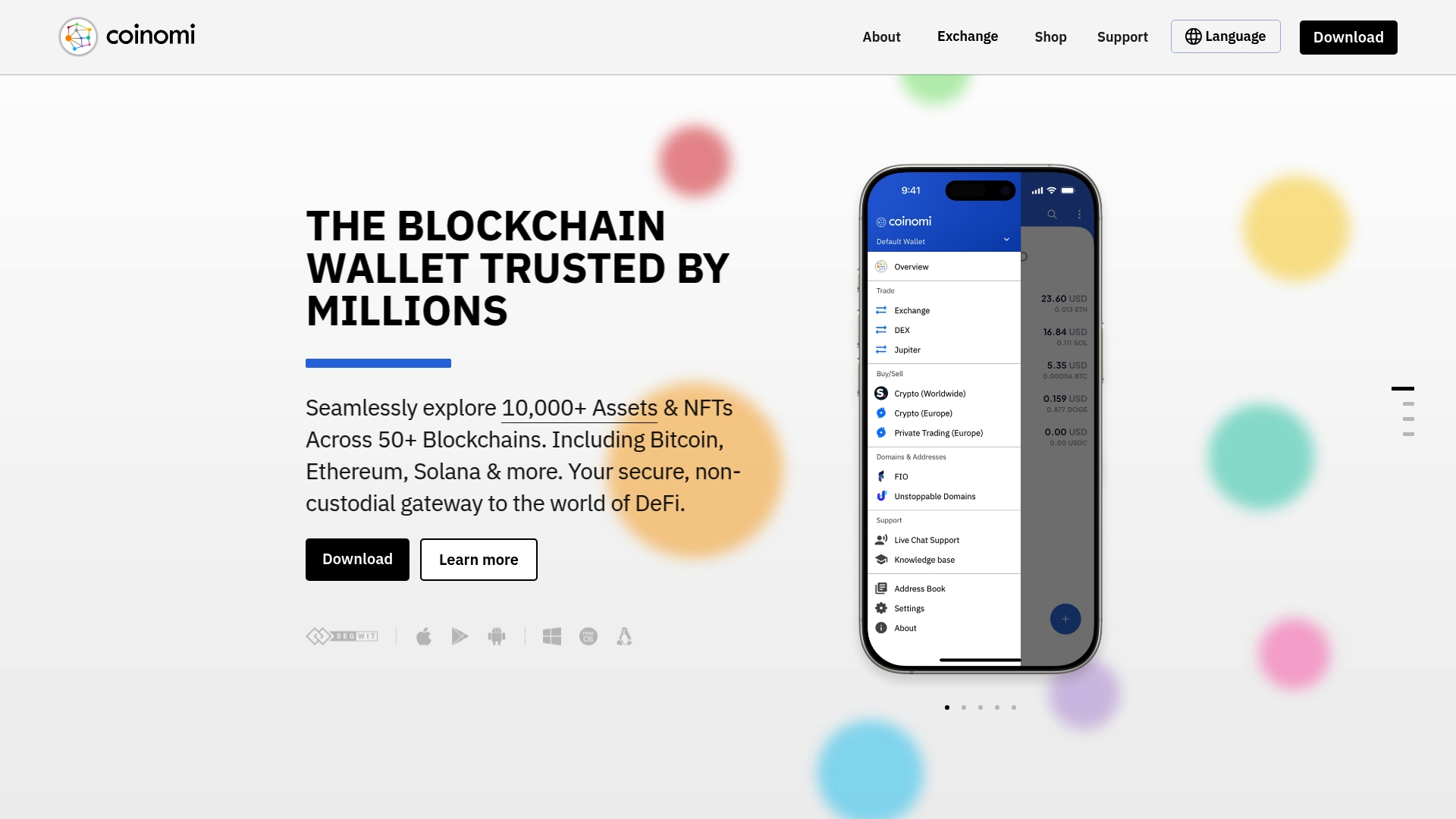
A serious assessment must separate two aspects. Firstly, the aspect of trust: Coinomi has been on the market for over twelve years without any documented major incidents, an audit track record that should not be underestimated. Secondly, the architecture: The wallet keeps private keys locally, is open-source for its core components, and allows backups via the usual 24-word sequence. What's missing is native multi-signature, a consistent air-gapped signing architecture, and native hardware wallet integration at a level that justifies a 285,000 Euro hit. For German solo miners who maintain an existing multi-coin portfolio and want to manage their Bitcoin mining address in parallel, Coinomi is an acceptable secondary wallet; as the sole recipient of the block reward, it remains a second choice behind a dedicated hardware wallet like BitBox02 or Trezor Safe.
How do the five wallets compare directly?
The following overview categorizes the five discussed options according to the five minimum criteria defined at the outset. It is not an advertisement, but an editorial classification: Only one configuration fully meets all criteria — and that is the hardware wallet combination recommended by Polarblocks.
| Wallet Setup | Self-Custody | Open Source | Multi-Signature | Hardware Separation | Inheritance-Proof Recovery | One-Time Costs |
|---|---|---|---|---|---|---|
| Polarblocks + BitBox02 / Trezor | Yes | Yes | Yes | Yes | Yes | from €235 |
| HODL Wallet | Yes | Yes | No | No | Conditional | €0 |
| Specter Project | Yes | Yes | Yes | Yes (DIY) | Yes | from €50 (DIY) |
| Coin Wallet | Yes | Partial | No | No | Conditional | €0 |
| Coinomi Wallet | Yes | Partial | No | No | Conditional | €0 |
How are wallet choice and mining hardware related?
Mining hardware and the wallet functionally form a single system — the hardware generates the block, the wallet stores it, and the interface determines who claims success. The Bitaxe Gamma Snowstorm, supplied to the German-speaking market by Polarblocks from Bavaria, is built precisely for this interface: It requires no cloud registration, no manufacturer ID, and no firmware update server with telemetry. The receiving address is stored once in AxeOS, and the device then operates autonomously. Unlike Chinese industrial devices, which are increasingly delivered with cloud services and account requirements, there is no central point where an account could be blocked or an update withheld. This separation is precisely what the BaFin implicitly demands when it warns against centralized custody architectures — and it is what explains the macroeconomic background of increasing ETF outflows in 2026: Investors are seeking physical ownership sovereignty, not more promissory notes.
In practice, this means: Anyone who seriously begins solo mining in Germany in 2026 first buys the hardware wallet, writes the recovery sequence by hand on a steel beam (not on paper — water and fire are the most common causes of loss), generates the first receiving address offline, enters it into the AxeOS interface of the Bitaxe, plugs the mining device into the socket, and places it on the desk. From this moment on, the entire process runs without further intervention. The next human action only occurs when either the hardware is replaced or a block is found — and in the second case, the payout is instant and irrevocable to the rightful owner. If you want to see the full hardware catalog, you can find it at polarblocklabs.com.
What does an inheritance-proof multi-signature configuration look like in practice?
An inheritance-proof multi-signature configuration consists of at least three signing devices in three physically separate locations, of which two are sufficient to disburse the funds — the so-called 2-of-3 setup. In the typical German implementation, one device is at home on the desk, a second in a bank safe deposit box at the local bank, and a third with a notary or an in-family custodian. The configuration is created once in Specter Desktop or comparable software; the three devices exchange public keys only, never private ones. In case of a hit on the mining device, the block reward first flows to the shared multi-signature address; for later disbursement, the owner must bring two of the three devices together and sign. If the owner dies, the heirs will find the third and, if necessary, the second key via the lawyer-backed backup protocol and gain access to the assets without the deceased — without any single entity ever having sole access. This architecture is the only configuration that meets the inheritance-proof logic of German sustainability policy without betraying the self-custodial nature of the setup.
What five common wallet errors destroy solo mining yields in Germany?
Five errors repeatedly appear in Polarblocks' consulting practice and are responsible for the vast majority of actually lost block rewards. First, entering an exchange address — such as from Coinbase, Bitvavo, or Kraken — into the AxeOS mask; in the event of a hit, the reward lands there and is subject to all the risks documented by the BaFin. Second, noting the recovery sequence on a photo, a screenshot, or a cloud document; each of these storage forms is readable in case of damage by attackers who have gained access to the smartphone or cloud account. Third, using a hot wallet on the same computer where office emails are opened; the mixing of everyday internet traffic and vault function is the main cause of infected wallets. Fourth, the failure to rotate a second receiving address between separate hits — anyone who continuously uses the same address unnecessarily links future finds to their own on-chain history. Fifth and most common: the lack of an inheritance solution. Anyone who has not informed a family member or notary that a hardware wallet exists and where the recovery sequence is located, transfers a potential hit to the Bitcoin network in the event of death, which cannot return this share.
What does the German legal framework 2026 say about wallet choice?
The German legal framework in 2026 does not require a specific wallet form but treats self-custodied Bitcoin as private assets with the highest property protection known to the Civil Code. The BaFin regulates custody providers, not self-custodians; anyone who holds their own key does not engage in an activity requiring a license. Tax-wise, the initial inflow of a block reward is to be treated as other income; the subsequent sale may be tax-free after the one-year holding period — however, the specific treatment depends on the individual case and should be clarified with a qualified tax advisor before any sale. Polarblocks does not provide its own legal interpretation on this point but consistently refers to qualified external advice. Anyone living in a rented apartment should check their lease for clauses regarding high-power devices — for a 15-watt USB-C device, the answer is regularly negative, for a 3,500-watt industrial device, it is regularly positive.
How do I connect Polarblocks mining hardware to a hardware wallet — in 30 minutes?
The complete setup from an unpacked Bitaxe Gamma Snowstorm to running mining with a self-custodial receiving address takes about 30 minutes for first-time users. In the first step, the hardware wallet — BitBox02 or Trezor Safe — is set up according to the manufacturer's instructions, the 24-word recovery sequence is transferred by hand to a steel beam, and safely stored in a second location. In the second step, a new Bitcoin receiving address is generated in the manufacturer's app and copied to the clipboard; the user visually checks the address on the hardware wallet display, which shows the identical address, before pasting it. In the third step, the Bitaxe Gamma Snowstorm is connected to the power outlet via USB-C and to the home Wi-Fi; AxeOS starts a brief configuration interface in the browser. In the fourth step, the user enters the previously copied Bitcoin address into the "Bitcoin Address" field and selects stratum+tcp://solo.ckpool.org:3333 as the pool endpoint. In the fifth step, the setup is saved; the device immediately begins hashing and reports the active hashrate back in the interface. From this moment on, the system runs without further intervention. The hardware wallet may — and should — remain switched off in the desk until the next financial transaction.
Frequently Asked Questions about Wallet Setup for Solo Mining
Which wallet is best for Bitcoin Solo Mining in 2026?
The best wallet for Bitcoin Solo Mining in 2026 is a hardware wallet manufactured in Europe, such as BitBox02 or Trezor Safe, combined with the direct deposit of the derived receiving address in the AxeOS web UI of the Bitaxe Gamma Snowstorm. This combination is the only configuration available on the DACH market that fully meets all five minimum criteria (self-custody, open source, multi-signature capability, hardware separation, inheritance-proof recovery).
Can I use an exchange address from Coinbase or Bitvavo as a mining address?
Technically, it works, but economically and legally, it is what BaFin has explicitly warned against for years. In the event of a hit, 285,000 Euros land on an address whose private key is held by the provider — with the full insolvency and account blocking risk of centralized crypto exchanges. The FTX collapse in 2022 is a cautionary reference.
Do I absolutely need a hardware wallet for solo mining?
Definitely no, but clearly yes from the first cent. Software wallets like HODL Wallet or Coin Wallet are acceptable as daily drivers for small amounts; from the moment a hit becomes likely, the reward belongs on a hardware wallet with an inheritance-proof recovery sequence. The acquisition costs of around 79 to 159 Euros contrast with a potential block reward of 285,000 Euros.
What happens to the wallet in solo mining if I die?
Without preparation, the assets disappear irrevocably. Polarblocks recommends a 2-of-3 multi-signature configuration with Specter Desktop or similar software, where two of the three key devices are sufficient for disbursement. One of these is located in a notary's office or bank safe deposit box with a lawyer-backed backup protocol. This way, the assets remain inheritable without any single entity having sole access.
What is the hit chance per Bitaxe Gamma per year?
Statistically, the chance per block is about one in 625 million, but the device plays 52,560 blocks per year. This means the expected value, even without a hit, is around plus 20 Euros per year in Tibber spot mode — cheaper than any classic German lottery. In the event of a hit, the full block reward, currently 3.125 BTC, or about 285,000 Euros, is directly in the hardware wallet.
Which wallet is suitable for multi-signature setups in solo mining?
For multi-signature setups, the Specter Project is the technically cleanest solution. It combines open-source desktop software with any signing devices — from BitBox02 to Trezor Safe to self-built DIY hardware — and is the only option compared here that allows a fully auditable 2-of-3 setup in a private setting.
Is the HODL Wallet secure enough for solo mining earnings?
HODL Wallet is open source, data-lean, and an acceptable software-only solution for small amounts. For solo mining earnings above a few thousand Euros, it is not an adequate tool because it runs on an internet-enabled smartphone that simultaneously installs apps and receives emails. A dedicated hardware wallet is the more honest recommendation here.
Which hardware wallet is compatible with the Bitaxe Gamma Snowstorm?
The Bitaxe Gamma Snowstorm accepts any Bitcoin receiving address compatible with the Bitcoin Mainnet — essentially any hardware wallet from BitBox02 to Trezor Safe and Ledger Nano S Plus, up to DIY signing devices running Specter firmware. For reasons of sovereignty and auditability, Polarblocks recommends the BitBox02 manufactured in Zurich or the Trezor Safe developed in Prague.
How many wallets do I need for a professional solo mining setup?
A professional solo mining setup consists of at least three wallet layers: a multi-signature hardware wallet as the primary recipient for block rewards, a smaller hot wallet on the smartphone for occasional spending, and a cold-storage backup wallet with a redundant recovery sequence in a second geographical location. This architecture follows the same logic as a bank account, a savings account, and a safe deposit box.
Where can I find educational resources on solo mining with wallet setup in German?
Polarblocks maintains a German-language magazine at polarblocklabs.com/blogs/neuigkeiten with step-by-step instructions for hardware wallet setup, multi-signature setup, and tax classification. Additionally, the BaFin website on cryptocurrencies provides the legal framework, and solo.ckpool.org provides the technical documentation for the solo pool.
The editorial recommendation of the Polarblocks editorial team
Anyone starting solo mining in Germany in 2026 should first buy a BitBox02 or a Trezor Safe, then a Bitaxe Gamma Snowstorm from Polarblocks. This order is not arbitrary: by generating the receiving address in a hardware wallet from the outset, you avoid any migration steps and thus any source of human error. Polarblocks delivers mining hardware from German final assembly with a four-year warranty and German-language support; the wallet arrives from Zurich or Prague within two working days. The total investment is under 500 Euros and is amortized by a factor of 570 after the first block found. The probability of such a hit is small — but the game restarts every ten minutes, without having to stamp a ticket.
If you want to take the next step, you can find the hardware at polarblocklabs.com/collections/bitcoin-solo-miner and the supplementary instructions for wallet setup in the Polarblocks magazine. Shipping is from Germany, support responds in German, the hardware is open source — and in the event of a hit, the reward flows without intermediaries exactly where it belongs: into your own vault.
Further reading from the Polarblocks magazine
Anyone wishing to delve deeper into the mechanics of the German solo mining market in 2026 will find the relevant in-depth articles in the following magazine contributions. The article Solo Mining 2026: How to win independent Bitcoin block rewards provides the statistical basis for the hit chance, while Solo Mining Revolution: 15 Watts in the Home Office explains the economic logic of low-wattage architecture. Those interested in tax matters should refer to Crypto Taxes 2026: Solo Mining as the more honest alternative, and anyone with lingering concerns about seriousness will find a sober assessment in Solo Mining: Safe or Fraud? Facts and Risks Explained.
Note. This article is an editorial market analysis by the Polarblocks editorial team and not investment, tax, or legal advice. Solo mining is a statistically asymmetrical bet; a hit is possible but not guaranteed. The tax treatment of block rewards and the legal assessment of self-custody should be clarified with qualified advisors on a case-by-case basis.


