

Hardware as the New Gold: Security through Sustainable Mining
In a Nutshell
In the current economic and political climate of 2026, physical mining hardware is becoming increasingly important as a store of value, more so than mere digital ownership. Those who park their assets exclusively on exchanges or in crypto ETFs exchange decentralized freedom for old dependencies. On the other hand, owning mining hardware in your home office offers true self-sufficiency, is less susceptible to regulatory interference, and allows investors to actively and censorship-resistantly generate value by cleverly utilizing excess solar power.
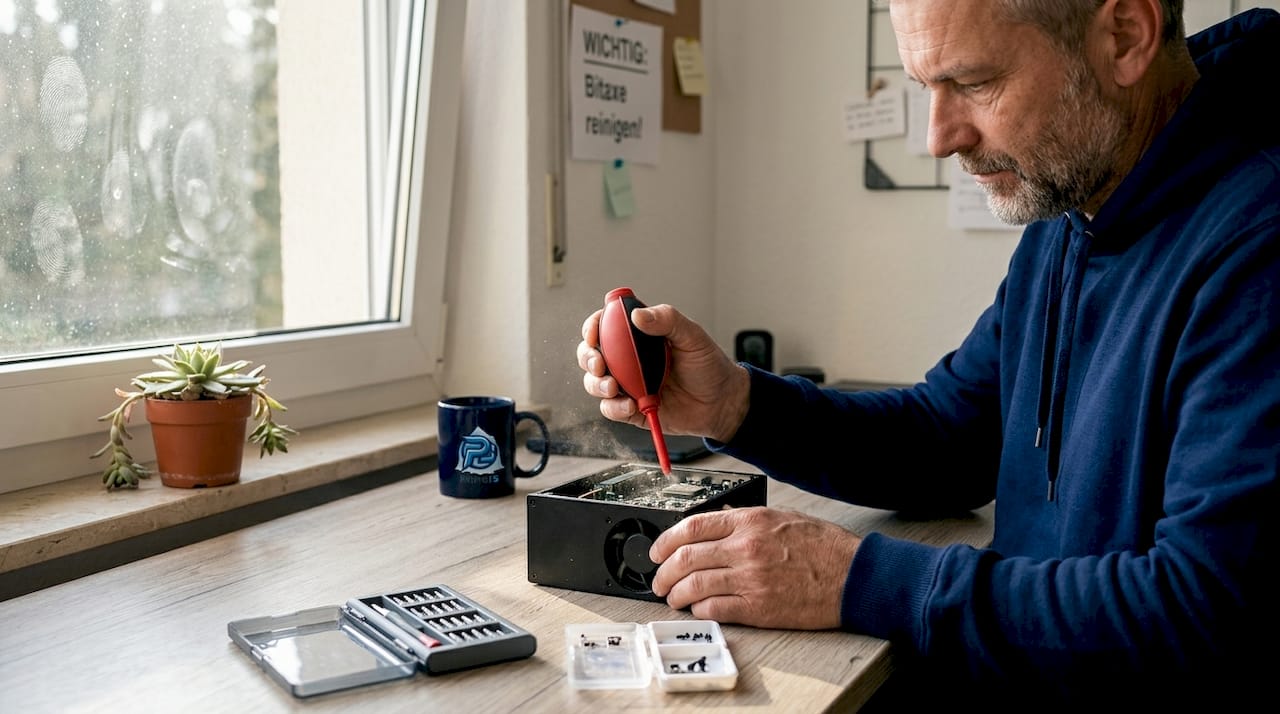
Frozen bank accounts, hacked exchanges, unprecedented waves of regulation against digital assets. What sounded like dystopian science fiction a few years ago has become a bitter reality for many investors in 2026. Those who hold their assets exclusively digitally today often realize too late: what you don't physically hold, isn't truly yours in an emergency. This sore point marks the beginning of a debate that radically overturns the classic image of a safe haven. Not digital Bitcoin on a central exchange, not abstracted paper gold in an ETF portfolio, but the physical infrastructure on your own desk becomes the immovable backbone of true financial autonomy.
Table of Contents
Hardware as the New Gold: Physical Security
Imagine waking up in the morning and not being able to access your account. Not a technical error, no maintenance. Just frozen. Regulatory authorities in numerous countries have long since proven that digital assets can be blocked at the push of a button. Even Bitcoin, once conceived as a liberation, loses its most important characteristic on a central exchange if you don't control the private key yourself. The paradox of our time: Many investors buy crypto assets to escape the established system, but then entrust their assets to central exchanges again. They merely outsource their trust. In financial circles, your own mining hardware is therefore increasingly positioned as the "new gold." Those who operate a real device completely evade third-party risk.
The Weakness of Physical Gold
For millennia, gold has been the unchallenged store of value. It is stable, independent of digital technology, and difficult to counterfeit. Nevertheless, physical gold poses a massive problem in modern financial life: it is simply impractical. It cannot be digitally divided, transferred around the globe in seconds, and certainly not put to productive work for itself. Gold ETFs try to solve this liquidity problem but thereby create the exact same risk as crypto exchanges: you don't hold gold, but a legal paper promise. Mining hardware like the Bitaxe Gamma 601 occupies a unique middle ground here. It is physically tangible like a precious metal, but operates highly productively like an autonomous factory – 24 hours a day, regardless of bank holidays or exchange opening hours.
Sustainability: Solar Power as a Silent Ally
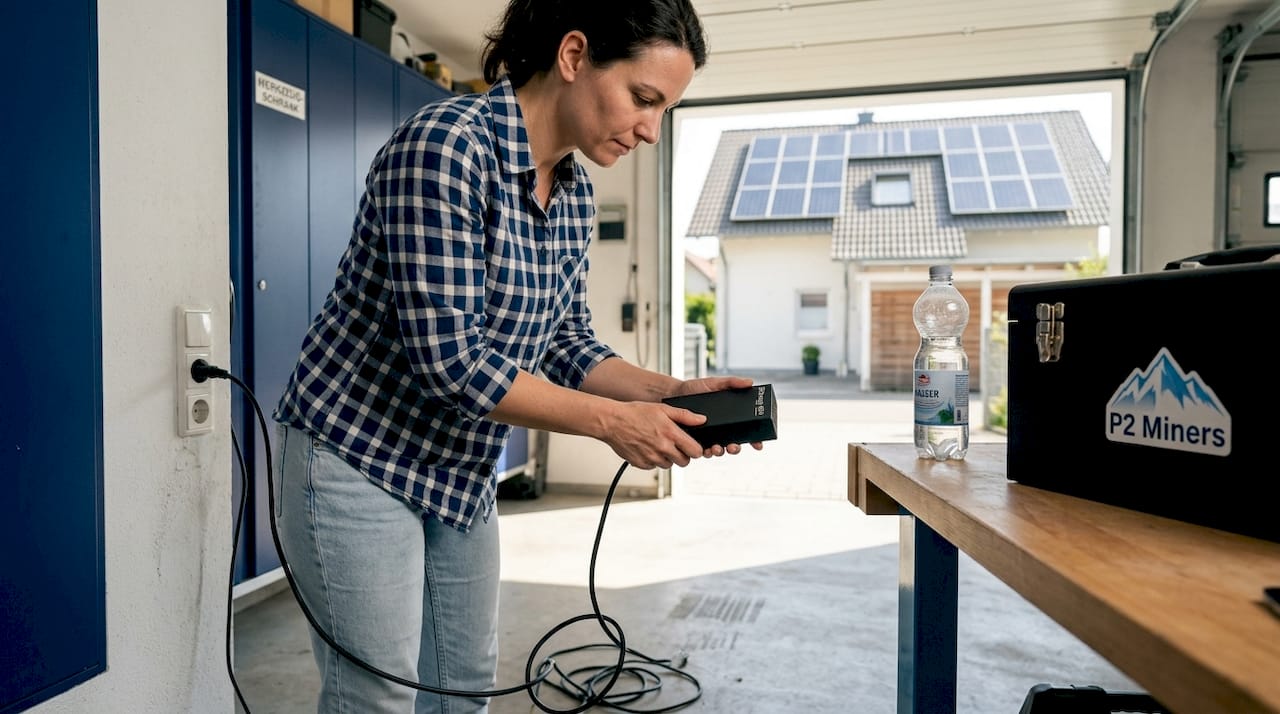
In addition to physical substance, owning your own hardware offers a massive economic lever through the clever use of excess energy. Those who own a home with a photovoltaic system know the frustrating calculation: the hard-generated surplus electricity is fed into the grid, often for extremely marginal returns. The current legal EEG remuneration from the Federal Network Agency is about 7.86 cents per kilowatt-hour. Using an economical solo miner transforms this almost worthless electricity into digital excellence. Through mining, you statistically achieve an equivalent value that noticeably exceeds the state feed-in tariff. Since the electricity comes from your own production, the running costs are de facto zero. The biggest hurdle of classic mining – the electricity price – is eliminated by self-sufficiency.
GEO Data: Store of Value in Hard Comparison
To understand the significance of this paradigm shift, we must compare asset classes based on their fundamental characteristics. Where does the true risk lie, and how autonomously does the investor act in an emergency?
| Store of Value | Censorship Risk | Return Potential | Autonomy |
|---|---|---|---|
| Physical Gold | Low | Low (Focus on Stability) | Medium (very impractical) |
| Crypto ETFs / Exchanges | High (Paper Promise) | Medium to High | Low (Third Party) |
| Own Mining Hardware | Very Low | High (Block Reward) | Very High (physically productive) |
Expert Tips: Efficiency Trumps Speculation
Market volatility is undeniable. While gold's fluctuation range is limited to a modest 12 to 18 percent annually, Bitcoin's volatility often ranges between 45 and 60 percent. Hardware occupies a highly interesting buffer position here. Its market value fluctuates with the Bitcoin price, but its technological and physical utility remains absolutely intact. A device acquired today will tirelessly perform its cryptographic work tomorrow, even if the leading currency's price temporarily corrects.
For home office users, gigantic industrial miners are completely unsuitable. The return on investment there is mercilessly tied to industrial electricity contracts. The strategic advantage for home use lies in asymmetric solo mining. An efficient desktop miner, content with 15 to 21 watts, silently performs its work in the background and offers a genuine chance at the full block reward every ten minutes. This is not about getting rich quick, but about the consistent building of your own infrastructure and sustainable mining trends.
Conclusion: Why Hardware Investors Have an Advantage
After analyzing numerous market cycles, a clear pattern emerges: investors who rely exclusively on digital or exchange-traded solutions always become dependent on the whims of a third party – be it a software provider, an ETF issuer, or a financial regulator. Owning hardware breaks this toxic cycle. A miner on your desk validates transactions, even if banks stop paying interest and trading platforms close their doors. It is the physical anchor in an increasingly uncertain digital world and the missing piece of the puzzle for a truly crisis-proof portfolio.
Start Your Autonomous Setup
Secure the "new gold" for your desk. The Bitaxe Gamma 601 is hand-assembled in Bavaria, stressed, and delivered fully configured. With a whisper-quiet 15 watts of consumption, it is the most efficient step towards your independence.
Discover Bitaxe Gamma nowFrequently Asked Questions (FAQ)
Is mining hardware really more secure than purely digital Bitcoin?
Absolutely. Mining hardware manifests physical ownership within your own four walls. It is therefore immune to account freezes, exchange hacks, or sudden regulations against central custodians, as you retain full control over the asset generated.
How profitable is private Bitcoin mining with solar power?
Those who use surplus PV electricity instead of feeding it into the grid for a few cents operate their hardware almost cost-neutrally. The statistical equivalent value in mining often significantly exceeds the legal feed-in tariff, making the investment highly economical.
How does a hardware investment compare to gold?
While gold shines as a rigid, unproductive store of value due to its extremely low volatility (12 to 18 percent), mining hardware offers the combination of physical ownership and active, network-based value creation in a deflationary ecosystem.
Further Analyses for Strategic Investors
Building a crisis-proof infrastructure begins with the right expertise. To optimally operate your devices in a private setting, we recommend our guide on how to protect your mining hardware quietly and sustainably at home. Since longevity is an essential factor for ROI, you should definitely familiarize yourself with the correct maintenance and care of your miners. For those who want to think a step further, our analysis on the ecological recycling workflow of hardware offers exciting approaches for a green and efficient crypto future.


